
Food and Tech Collide! The Best, Worst, and Weird at CES 2026
Every January, CES delivers a fascinating cross-section of consumer technology: genuine innovations, questionable solutions, and products that make you wonder who greenlit the project. As someone who spends days troubleshooting network infrastructure and evenings perfecting sourdough recipes, I look at these products through a particular lens: does this technology solve real problems, or does it create new ones? After extensively researching the announcements from CES 2026, here are my picks for the best, worst, and weirdest tech from this year's show.
The Best: TCL Note A1 NXTPaper – A Display Technology That Understands Human Needs
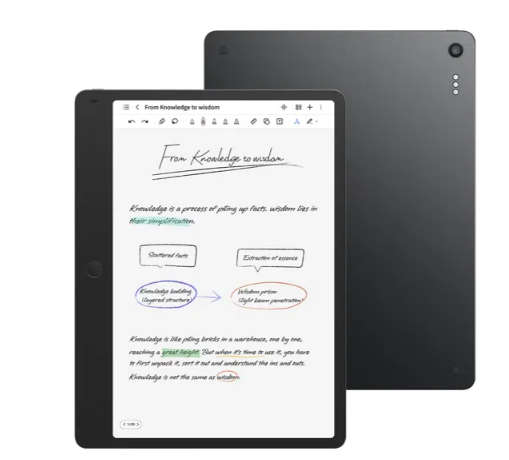
Thin, responsive, and massive battery? Yes!
In a sea of products screaming "AI-powered!" at every opportunity, TCL's Note A1 NXTPaper stands out by solving a tangible problem that plagues IT professionals, developers, and anyone who stares at screens for 8+ hours daily: screen fatigue.
This 11.5-inch tablet uses TCL's NXTPaper Pure display technology to create what reviewers consistently describe as a paper-like writing experience, but with all the responsiveness of a modern LCD screen. For those of us who've tried e-ink tablets like the reMarkable or Kindle Scribe, the compromise has always been clear: you get easy-on-the-eyes technology at the cost of refresh rates that make you feel like you're working through mud.
The Note A1 eliminates that trade-off. It sports a 120Hz refresh rate with a 2,200 x 1,440 resolution, supporting 16.7 million colors with adaptive brightness. This isn't e-ink's sluggish monochrome experience—it's a fully capable LCD that happens to not destroy your retinas during marathon documentation sessions.
The AI features here actually enhance productivity rather than adding bloat. Handwriting recognition converts notes to text, audio transcription handles meeting notes, and automatic document summarization helps process lengthy technical documentation. These aren't revolutionary capabilities, but they're integrated thoughtfully into a device designed for people who actually work with information all day.
At $549, the Note A1 positions itself between Amazon's Kindle Scribe lineup and the reMarkable Paper Pro. For IT professionals who spend mornings in terminal windows and evenings reviewing technical specifications, having a device that doesn't contribute to digital eye strain while maintaining full functionality represents genuine value.
The Note A1 earned multiple "Best of CES" awards, and unlike many trade show accolades, this recognition appears deserved. It's innovative without being gimmicky, practical without sacrificing capability, and solves a problem that affects millions of knowledge workers daily. Sometimes the best technology is the technology that reduces friction rather than adding features.
The Worst: Samsung Bespoke AI Family Hub – A Masterclass in Unnecessary Attack Surfaces
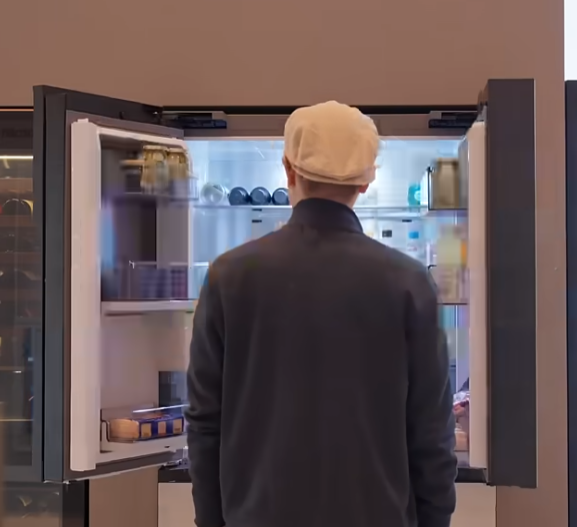
…Why does this thing have motors? And Bixby???
As someone who is responsible for infrastructure security at work, I maintain a simple philosophy: every connected device is a potential security liability, and every unnecessary feature is a future maintenance headache. Samsung's latest Bespoke AI Family Hub refrigerator violates both principles spectacularly.
The headline feature that earned this product its "worst" designation? Voice-activated door opening. You can now tell your refrigerator to open its door, and motorized mechanisms will comply. For situations where speaking aloud isn't practical, you can also tap the door to trigger the same mechanism.
Let's examine this from a network security perspective first. Every IoT device represents an endpoint that requires security updates, authentication management, and monitoring. Smart appliances traditionally have abysmal security track records—manufacturers treat them as appliances rather than computers, which means they receive irregular security patches and often ship with default credentials or outdated software stacks.
Now Samsung has added voice recognition and motorized physical controls to this mix. The refrigerator must now constantly listen for wake words, process audio input, authenticate commands, and trigger physical mechanisms. Each of these capabilities expands the attack surface considerably.
Consider the implications: your refrigerator is now running voice recognition software, likely processing data in the cloud, storing voice patterns, and controlling motors. An attacker who compromises this device doesn't just gain access to your grocery inventory—they can potentially manipulate physical hardware in your home. While the actual danger might be minimal (what's the worst-case scenario? Spoiled groceries?), the principle matters enormously.
Many IT professionals who own smart appliances—myself included—purposefully segment these devices onto separate VLANs, isolated from trusted network resources. We do this because we understand that a compromised IoT device shouldn't become a pivot point for lateral network movement. Adding voice-controlled physical mechanisms only reinforces why this isolation is necessary.
From a reliability engineering perspective, the design is equally troubling. A refrigerator has one primary job: maintain consistent low temperatures to preserve food. Modern refrigerators accomplish this remarkably well, often running reliably for 10-15 years with minimal maintenance.
Every additional feature—every motor, sensor, microphone, and networked component—adds potential failure modes. When your refrigerator's door-opening motor fails (and eventually, it will fail), you don't just lose a convenience feature. You might lose access to your food, require expensive repairs, or face a situation where parts are no longer available because the manufacturer moved on to the next product generation.
Samsung's marketing frames this partially as accessibility technology, which has merit. Motorized access genuinely benefits people with mobility limitations. But that's not the primary marketing message. This is being sold as futuristic convenience, as the inevitable evolution of the smart home, as AI making life effortless.
What it actually represents is feature creep: adding capabilities because they're technically feasible, not because they solve user problems proportional to their cost and complexity. Your refrigerator doesn't need voice control. It needs reliable temperature management, good energy efficiency, and a reasonable expectation that it won't become obsolete when manufacturer support ends in three years.
The Bespoke AI Family Hub starts at several thousand dollars. For an IT professional evaluating this purchase, the calculation is straightforward: that premium buys additional complexity, expanded attack surfaces, and more components that can fail. Sometimes the best technology is technology that does one thing extremely well rather than many things adequately.
The Weirdest: C-200 Ultrasonic Chef's Knife – When Kitchen Tools Meet USB Charging
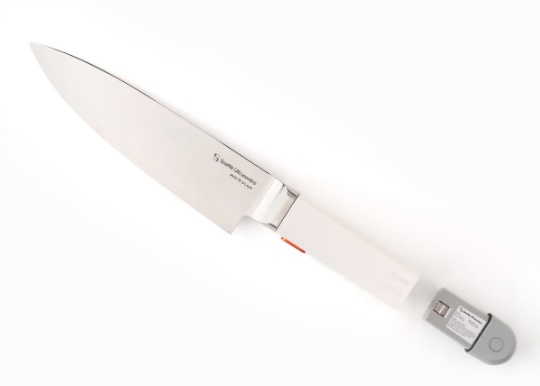
Undeniably cool, but potentially cumbersome.
As someone who bakes sourdough and braises short ribs with the same meticulous attention I apply to network architecture, I thought I'd seen every kitchen gadget gimmick. Then Seattle Ultrasonics announced the C-200: a $400 chef's knife that requires USB charging to vibrate ultrasonically at 40,000 times per second—vibrations you can't see, hear, or feel, but which supposedly reduce cutting resistance by 50%.
The engineering is legitimately impressive. The C-200 uses PZT-8 piezoelectric ceramic crystals mounted to an 8-inch Japanese AUS-10 steel blade. When activated via an orange button on the handle, these crystals expand and contract microscopically, creating ultrasonic vibrations that reduce friction at the blade edge.
The science is well-established. Industrial ultrasonic cutters have been used in commercial food processing for years, particularly for delicate products like cakes, cheese, and confections. Research published in the Journal of Food Engineering confirms that ultrasonic technology reduces cutting forces and creates cleaner slices. Seattle Ultrasonics spent six years miniaturizing this industrial technology into a consumer product.
According to reviews and demonstrations, it works. The blade glides through tomato skins without crushing, prevents crumbs and cheese from sticking, and requires measurably less force for precision cuts. The oscillations measure 10-20 microns—less than a quarter the width of a grain of salt—so the vibration is imperceptible to the user. The IP65 water resistance rating means it can be hand-washed like any conventional knife, and the removable battery provides approximately 20 minutes of continuous cutting per charge.
From a culinary perspective, the value proposition is puzzling. Professional-grade Japanese chef's knives from established brands like Shun or Miyabi retail for $300-500, and they don't require batteries or charging infrastructure. A properly maintained conventional knife, kept sharp with regular honing and occasional professional sharpening, will cut through virtually anything a home cook encounters with minimal effort.
The ultrasonic feature might reduce cutting force by 50%, but was cutting resistance ever a significant problem for most home cooks? The scenarios where this technology provides clear advantages—people with arthritis, limited hand strength, or specific professional applications requiring extremely clean cuts—represent a relatively narrow use case.
Here's where tech thinking intersects with kitchen practicality: the C-200 introduces dependencies that conventional knives simply don't have. It requires charging (another device in your rotation alongside phones, tablets, and smartwatches). It presumably requires firmware to manage the piezoelectric controls. It depends on Seattle Ultrasonics remaining in business to provide support and replacement parts. The removable battery will eventually degrade and require replacement.
When the battery dies mid-prep, you have a $400 conventional knife. When the piezoelectric crystals eventually fail, you need manufacturer service. When Seattle Ultrasonics discontinues the product line in 5-7 years, you're left hoping that replacement batteries remain available on the secondary market.
Contrast this with a traditional Japanese chef's knife: buy once, maintain properly, use for decades. No charging, no firmware updates, no dependencies on manufacturer support. The technology is mature, proven, and requires only basic maintenance skills to keep functional indefinitely.
Yet I can't entirely dismiss the C-200. The engineering represents genuine innovation—taking industrial technology and making it viable for consumer use. The $149 optional wireless mahogany charging tile is beautifully designed. That citrus mist effect for cocktails (where ultrasonic vibrations create a fine spray of juice off the blade) is admittedly cool. The knife sold out its first production run and has a waitlist for batch two, indicating there's genuine market demand.
Perhaps ultrasonic knives will become commonplace kitchen tools in a decade, and we'll look back at conventional blades the way we now view manual can openers. Or perhaps the C-200 will become a curious footnote in kitchen gadget history, a beautiful solution that never quite found its problem.
Either way, it's definitely weird—and I mean that with genuine respect for the engineering achievement, even if I question the practical necessity.
Final Thoughts
CES 2026 showcased technology at its most revealing: solutions that genuinely improve daily work (TCL's eye-friendly display), over-engineered complexity that creates more problems than it solves (Samsung's voice-controlled refrigerator), and impressive engineering seeking its use case (the ultrasonic knife).
As a dabbler in all things tech who also happens to spend considerable time in the kitchen, I evaluate technology through a consistent framework: does it solve real problems proportional to its complexity? Does it introduce dependencies or risks that outweigh its benefits? Will it still be functional and supported in five years?
The best products meet these criteria elegantly. The worst fail them spectacularly. And the weirdest make us question our assumptions about what problems need solving in the first place.
See you at CES 2027, where I'm certain we'll find new examples of each category.
